1698: The Peace That Made the Pirates
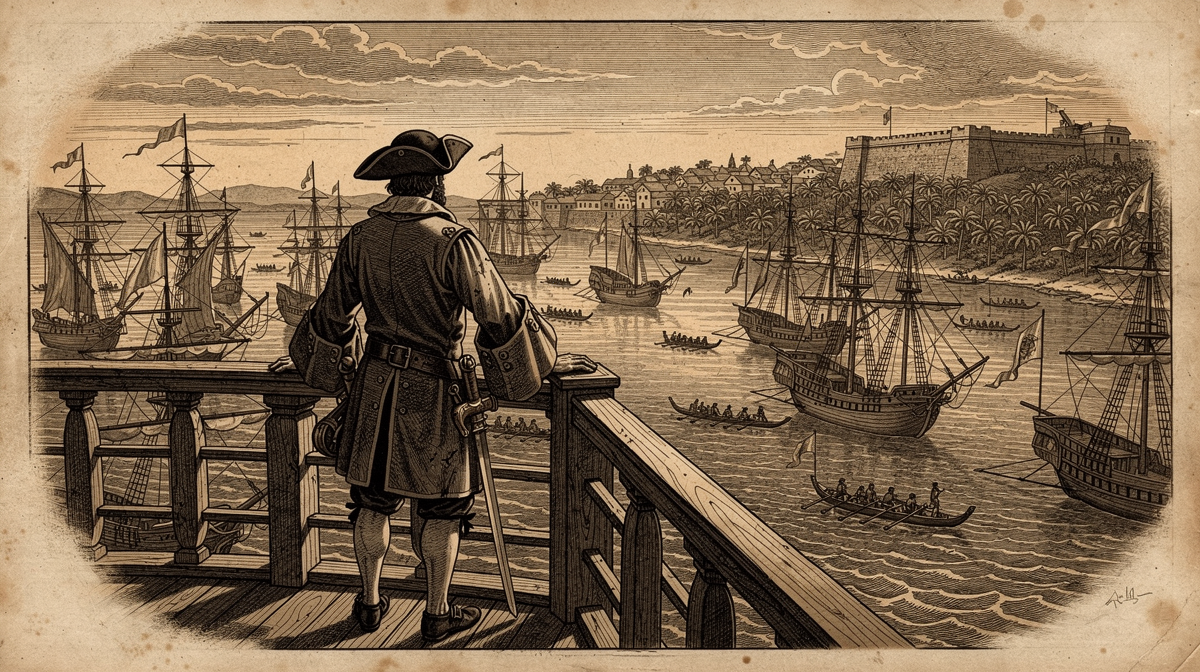
Azure Waves opens in 1698, and I get asked more than anything else why I picked that year. Most pirate stories skip straight to the famous decade, Blackbeard's decade, Anne Bonny's decade, the years everyone already knows from film and legend. I wanted the years before that, the raw and unglamorous start of it, because 1698 is when the Caribbean filled up with trained fighting men who had just lost their jobs.
That's not a metaphor. It's a treaty.
A Treaty Nobody in the Caribbean Asked For
In September and October of 1697, diplomats gathered in the small Dutch town of Rijswijk and signed the peace that ended the Nine Years' War between France and the alliance arrayed against her, England and the Dutch Republic among them. Statesmen in wigs shook hands an ocean away from the men whose lives that handshake would upend.
For nearly a decade, England and her allies had commissioned private ship owners to raid enemy shipping under legal cover, a system called privateering. A privateer's commission was a license to plunder with the Crown's blessing, and plenty of hard men in Charleston, Port Royal, and a dozen smaller harbors had built their whole living on it. Ryswick canceled every one of those commissions in a stroke. The war that had paid their wages simply stopped existing.
What do you do with several thousand sailors trained for exactly one trade, suddenly told that trade is over? Some went home. Some signed onto merchant crews for a fraction of what raiding had paid. And a great many more kept doing precisely what they'd always done, minus the paperwork that used to make it legal. Historians call this moment the start of the Pirate Round, the surge of freelance raiding that followed the last legitimate privateering war of the century. The ships didn't change. The cannon didn't change. Only the commission in the captain's strongbox stopped being worth the paper it was written on.
I wanted Samuel to wash up into that specific world, not the mythologized one. When his path crosses men who've turned to piracy in these early chapters, I want the reader to understand they aren't cartoon villains who woke up wicked. Most of them are out-of-work soldiers of a war that ended in a room they never saw, making a living the only way they still know how.
New Providence, Before the Legends Arrived
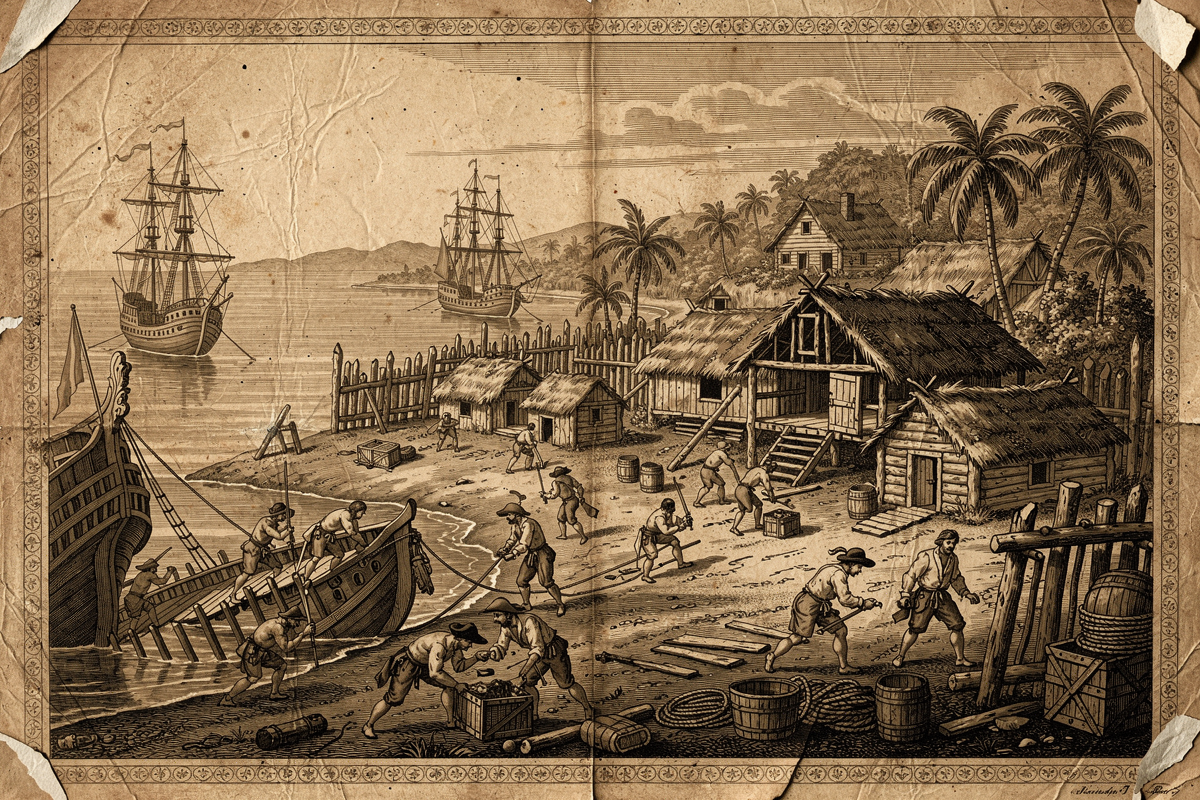
The other place I had to get right was Nassau, on the island the English called New Providence. Readers who know their pirate history from later stories, the ones set after 1715, picture Nassau as a full-blown pirate republic with its own rough government of captains. That Nassau didn't exist yet in 1698. It was still becoming.
The town had been rebuilt only a few years earlier, in 1695, by the Bahamas' governor after the Spanish had burned the previous settlement to the waterline. Royal authority over the islands was thin to the point of fiction. No proper garrison, no navy squadron close enough to matter, a governor with more titles than resources. That combination, a real harbor with real fresh water and safe anchorage, paired with almost no one enforcing the King's law, is exactly what drew the first wave of newly unemployed privateers in the years right after Ryswick. They didn't arrive to build a republic. They arrived because nobody was going to stop them from careening a ship on the beach and taking on water without a magistrate asking uncomfortable questions.
I find that version of Nassau more interesting to write than the famous later one. It's rougher around the edges, half-finished, full of men who haven't yet worked out what kind of place they're building. That uncertainty is where Samuel finds his footing, in a town that hasn't decided yet what it's going to become, alongside men who haven't decided either.
What This Means for Samuel's Charleston
None of this stayed confined to distant harbors. Charleston felt it too. Colonial merchants who'd quietly profited from privateer plunder, buying up captured goods at a discount and asking no questions, found the supply drying up along with the war. Some of those same merchants had no trouble looking the other way when the goods kept arriving anyway, just without a commission attached. The line between respectable trade and stolen cargo had always been thinner in a port town than anyone wanted to admit, and 1698 is when that line got tested hardest.
That's the Charleston Samuel grows up in and eventually flees. A city that built part of its comfort on a war just over the horizon, now watching that comfort curdle into something it can't fully control. When his own path takes him toward the Crimson Cross and the men who sail under it, he's not stepping into a world invented from nothing. He's stepping into the aftermath of a peace treaty that put thousands of armed men out of work and gave them a coastline full of places like New Providence to land.
I try to build every chapter this way, with the history doing the work under the surface so the adventure never feels like a costume. Whether Samuel ends up trusting the wrong man or the right one, I want the reasons to feel like they belong to 1698 and nowhere else.
If you haven't started the book yet, the first chapter is free to read on the site, and it's where all of this begins. Azure Waves is available for preorder now in hardcover ($49.99) and paperback ($19.99), expected mid-2026. I'm also posting more of this research over on YouTube at @Chris.Stirling, and shorter cuts on TikTok @chris_stirling and Instagram @chrisstirling.writer, if you want the history in smaller bites between chapters.
Keep reading the saga
Get the first chapter of Crimson Cross: Azure Waves free, or preorder the book.
Send me Chapter One