Tearing Up the Floorboards: The Brutal, Beautiful Work of the Developmental Edit
There is a specific kind of vulnerability in taking something you’ve built and deliberately pulling it apart.
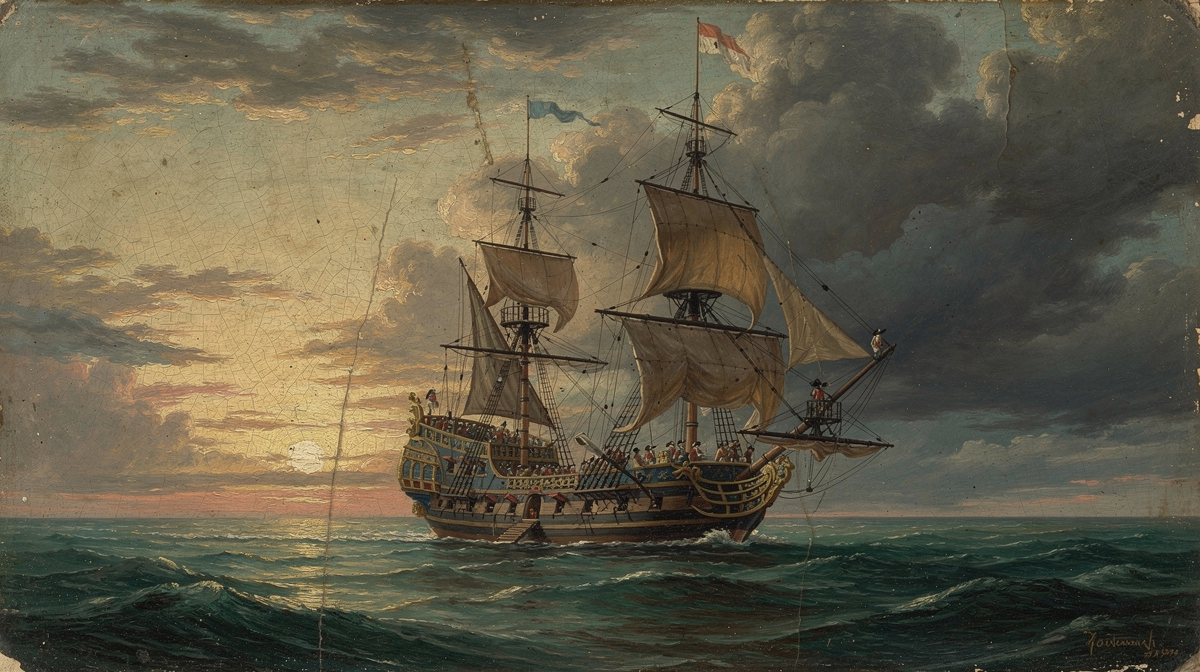
During the Golden Age of Piracy, crews routinely performed a grueling task called careening. They would intentionally run their ship aground on a shallow beach, heave the massive vessel onto its side, and expose its belly to the sun. For weeks, they would scrape away the barnacles, replace rotting timbers, and reseal the hull. It was ugly, exhausting, backbreaking work that left the crew completely exposed to attack. But it was an absolute necessity. If you didn't strip the ship down and fix what was broken beneath the waterline, the ocean would eventually claim you.
Lately, I’ve found myself in a very similar kind of drydock.
I am currently in the thick of developmental edits for my debut novel, and I’ll admit something that caught me entirely off guard: I thought typing "The End" on the first draft was the hard part. I couldn't have been more wrong.
A first draft is pure adrenaline and discovery. You are just trying to get the shape of the story onto the page. But the developmental edit—the phase I’m deep in right now—is where you have to look at your creation with cold, unforgiving honesty. It isn't about fixing typos or polishing dialogue. It’s about looking at the load-bearing walls of your narrative and realizing that some of them are in the wrong place. It’s cutting a character you love because they don't serve the theme. It’s rewriting an entire sequence because the emotional stakes haven't been earned. And wrestling that ecosystem into something that feels true and inevitable is the heaviest lifting I’ve ever done.
The surprise, however, isn't just in the volume of the work. The real surprise is how much I am genuinely enjoying it.
There is a profound satisfaction in tearing up the floorboards of a story to fix the foundation. The more layers I strip away, the closer the reality of a finished, solid book becomes. I don't want to hand readers a story that just looks good on the surface; I want to give them an immersive, authentic experience of the 18th-century Atlantic world. And if that means spending weeks rewriting the second act to make the characters’ choices ring true, it's a trade I will make every single time.
This intensive phase of the book has coincided with a massive shift in my own life. Last November, after years of living abroad, my wife, my son, and I packed up our lives and moved back home to Calgary.
Going from the intense, insular focus of living overseas as a tight-knit trio to being surrounded by extended family has been incredibly grounding. There is a quiet pride in being back in Canada, watching my son grow up around his grandparents, and feeling the roots take hold again.
It creates a fascinating contrast: spending my mornings deep in the violent, chaotic, and morally complex world of Caribbean piracy, and my afternoons walking through the snowy quiet of an Alberta winter. That sense of home and belonging has provided a steady anchor, giving me the patience and the perspective required to do this heavy lifting right.
The horizon is getting closer. The story is getting stronger. And I cannot wait to share what we’re building.
Author's Note: As we get closer to a finished manuscript, I’ll be looking for a select group of Beta Readers to help me road-test the story. If you're interested in getting an early look and providing feedback, make sure you're subscribed to the newsletter—details will be coming soon.
Keep reading the saga
Get the first chapter of Crimson Cross: Azure Waves free, or preorder the book.
Send me Chapter One