The Compass Rose: How a Footnote Became the Heart of Azure Waves
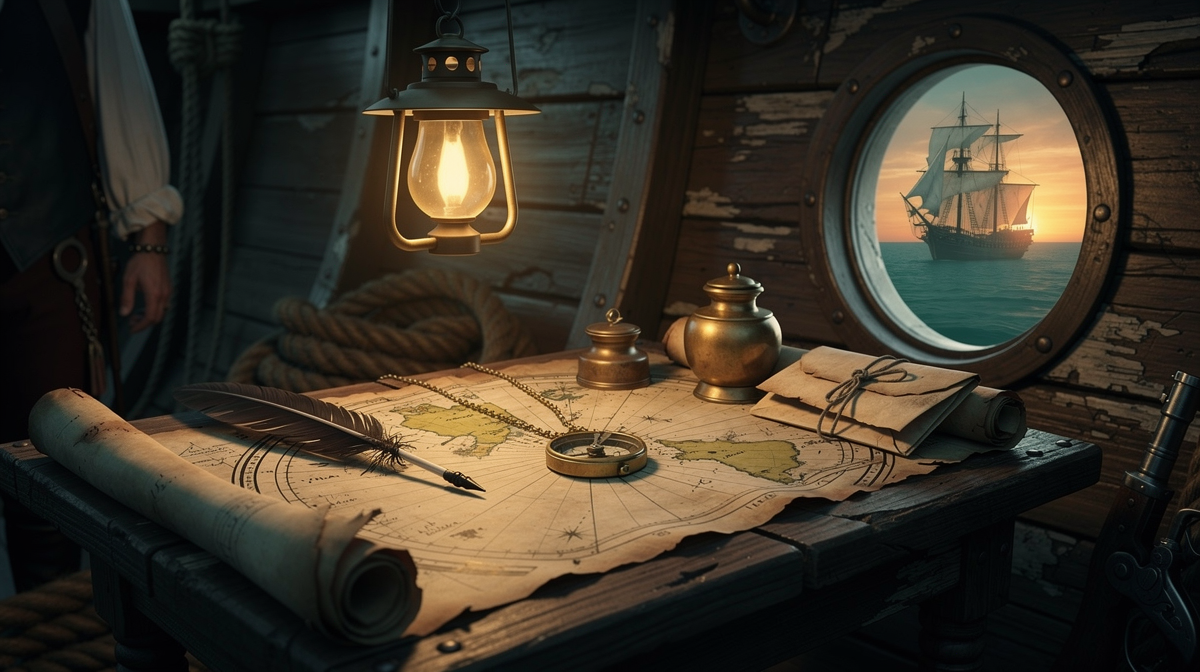
The Compass Rose: How a Footnote Became the Heart of Azure Waves
Some details you plan into a novel from the outline. Others you find buried in a court record and can't let go of. This is the story of a small piece of jewelry that ended up carrying the emotional weight of the whole book.
A Footnote About Jewelry
I did not go looking for a pendant. I went looking for ships.
Most of my research for Crimson Cross starts with the dry stuff: admiralty court records, customs manifests, the inventories drawn up after a vessel was seized or a crew captured. These documents list cargo in flat, bureaucratic language, barrels of salt beef, bolts of sailcloth, coils of rope by the fathom. But tucked between the cargo entries, court clerks sometimes recorded personal effects. A silver buckle. A prayer book with a name inked inside the cover. A ring taken off a dead man's hand and logged like any other piece of property.
One inventory, from a case I was reading for an entirely different reason, listed a small brass compass pendant, the kind sailors sometimes wore or gave as keepsakes before a long voyage. The clerk had noted it almost as an afterthought, wedged between a folding knife and a pair of stockings. I sat with that single line for longer than I care to admit.
A compass rose was not just decoration in this period. It was the object that told you which way was home. Navigators lived and died by the accuracy of the one painted on their charts. Families understood, in a way we mostly do not anymore, that the difference between a safe return and a name never spoken again could come down to a few degrees of bearing, read correctly or read wrong. Giving someone a compass, even a small worthless one on a chain, was a way of saying: find your way back to us.
I closed the research folder that day with a single note to myself, four words long. Compass rose. Matching pair.
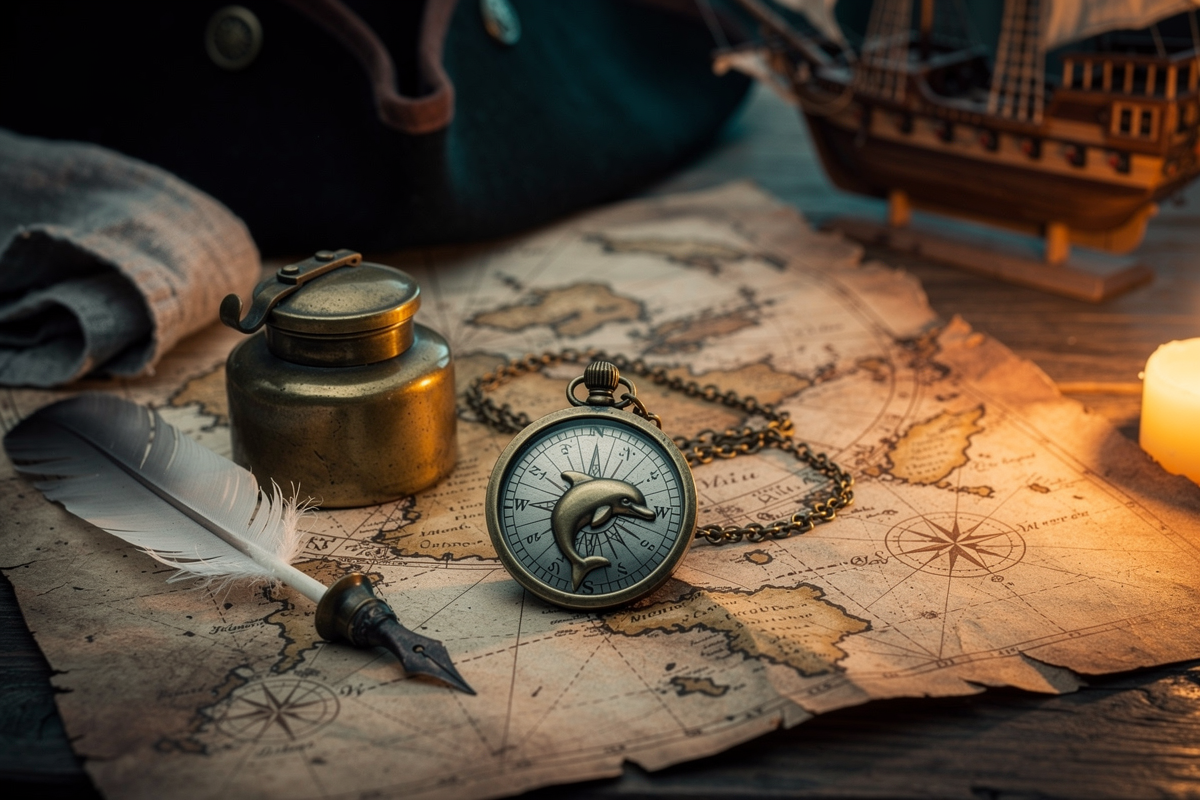
What the Dolphin Meant
The pendants did not arrive in the manuscript as symbolism. They arrived as a practical problem I needed to solve. Samuel and Abigail are separated early, thrown into very different worlds, and I needed something small enough to survive a shipwreck, a raid, and years apart, something that could pass between hands without anyone questioning why a young woman running an intelligence network still carried it.
So I gave the Draytons matching compass rose pendants, a father's gift, each with a dolphin worked into the center where the needle would sit. Dolphins turn up constantly in the maritime folklore of the period, not as anything mystical, but as a genuinely observed piece of sailor's wisdom: a pod running alongside a ship was widely read as a sign of fair weather and safe passage. Sailors trusted it enough to write it into their logs. I liked the idea of a father who half-believed the old superstitions giving his children a symbol of guidance wrapped inside a symbol of luck, and not telling them which one he meant.
What surprised me, writing draft after draft, was how often that pendant wanted to reappear. A character reaching for it without meaning to. A scene where its absence said more than its presence would have. I had not planned for it to become load-bearing. I noticed only after catching myself, for the eighth or ninth time, writing "her fingers found the chain at her throat." By then it was too late to cut. It belonged to the book.
That is closer to the truth of this process than any outline ever is. You build the ship plank by plank, and every so often a plank you almost threw away turns out to be the one holding the rest together.
Where the Book Stands Now
The forty chapters of Azure Waves have been drafted for a while now, and most of my working days lately go to the less romantic side of the craft: checking each chapter against my own notes to make sure a wound heals on the correct timeline, a nickname does not drift, and the Nassau I describe in chapter six still matches the Nassau in chapter twenty-five. It is slow work, and it does not photograph well, but it is the work that turns a manuscript into a book someone can trust.
I will keep pulling threads out of court records and cargo manifests as long as this series runs, because the real archive is stranger and more specific than anything I would invent on my own. If you want to see where the compass rose ends up, the free first chapter is on the site now, and Azure Waves is open for preorder in hardcover and paperback ahead of its expected release in mid-2026.
Preorder Crimson Cross: Azure Waves, hardcover $49.99 or paperback $19.99, expected mid-2026, and read the free first chapter on the site. Follow along on YouTube at Chris.Stirling, TikTok at chris_stirling, and Instagram at chrisstirling.writer.
Keep reading the saga
Get the first chapter of Crimson Cross: Azure Waves free, or preorder the book.
Send me Chapter One