The Island With No Law: Nassau in Crimson Cross
A Harbor Built on a Bribe
Nassau did not become a pirate haven by accident, and it did not become one slowly. In 1696, the pirate captain Henry Avery sailed into the harbor at New Providence under a false name, claiming to be nothing more than an unlicensed trader looking for a friendly port. Governor Nicholas Trott knew better, or should have. Avery was, at that moment, the most hunted man on the Atlantic, wanted for one of the richest single heists in the history of piracy: the plunder of a Mughal treasure ship off the coast of India. Trott took the bribe anyway, reportedly worth nearly three times his annual salary, along with the use of Avery's abandoned ship, and let the crew walk ashore as free men. Within months, Avery's sailors had nearly doubled the island's population. Within a year, Trott had lost his governorship over it.
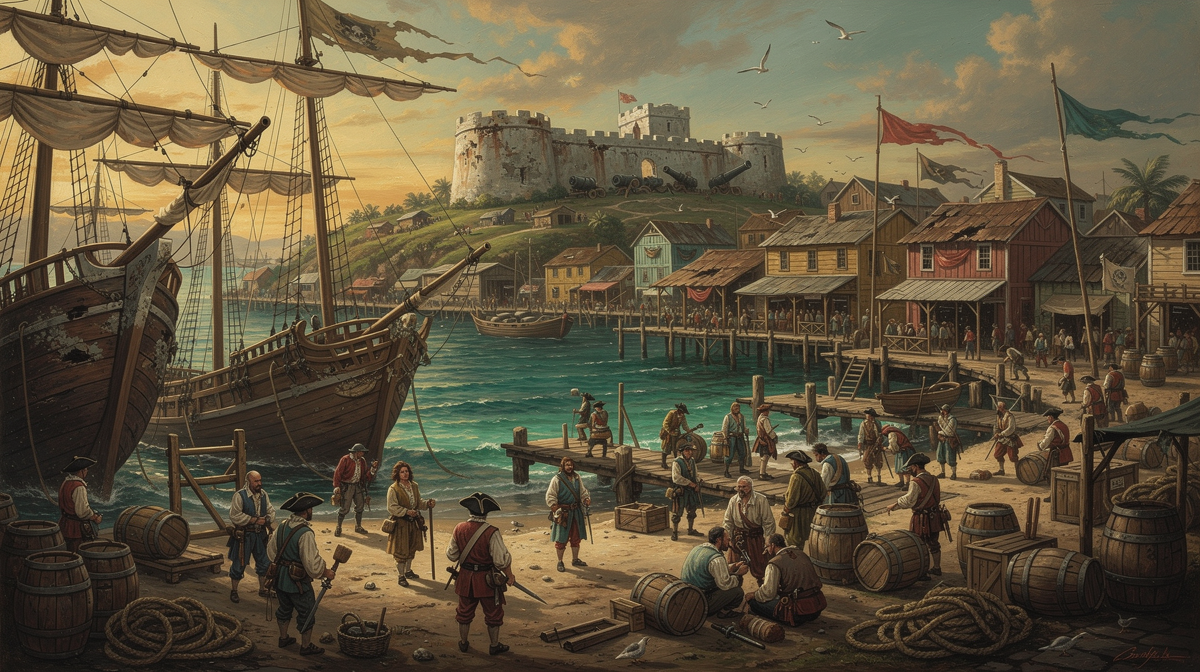
That scandal is only two years old when Samuel Drayton's story reaches Nassau, and everyone on the island still tells it, usually over rum, usually with a laugh at the crown's expense. It is the kind of story a place tells about itself when it has decided, collectively, not to be ashamed. Nassau in this period has no real navy patrolling its harbor, no customs house anyone respects, and no shortage of officials willing to look the other way for the right price. It is a town built on a technicality: officially English, unofficially ungoverned, and every ship that limps into its harbor low in the water and short on explanations is welcomed rather than questioned.
That is the Nassau I wanted on the page, not the more famous "Republic of Pirates" of a decade or two later, with its councils and its written articles, but the rougher, earlier version. The one where lawlessness is still improvised rather than institutional. It felt truer to where Samuel is in his own journey, a young man arriving somewhere the old rules simply stop applying, with nothing yet built to replace them.
Where Samuel Learns the Rules Don't Apply
Samuel Drayton grows up in Charleston believing that a name and a bloodline are a kind of armor. Nassau is the first place that armor means nothing. There is no polite society to impress, no ledger of family reputation anyone bothers to check. The harbor is a forest of careened hulls tipped on their sides for scraping, hulls that belonged to a dozen different flags before their current owners sanded the old names off the transom. The market smells of tar, rotting fish, and the sweeter rot of fruit gone soft in the heat, and half of what changes hands there was cargo on some other ship a month ago.
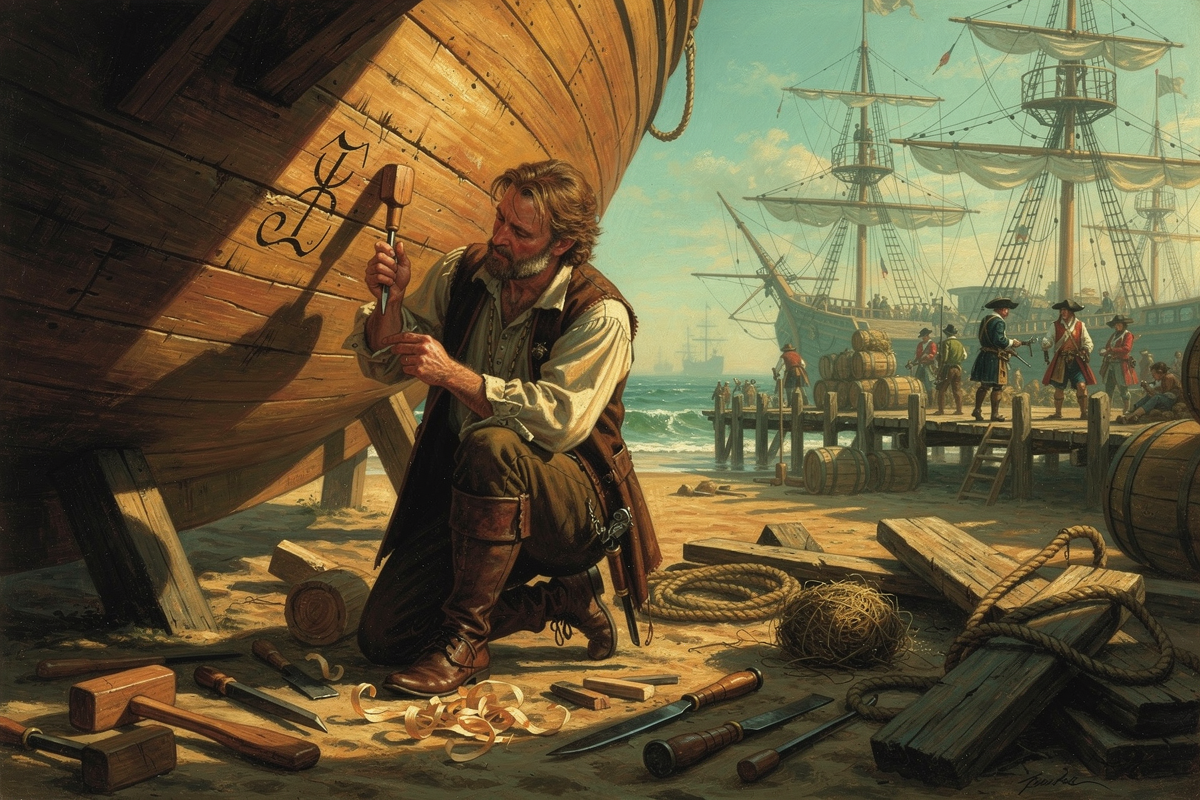
It is in Nassau that Samuel first meets Li Chen, a shipwright who works with a patience and precision that has nothing to do with the chaos around him, carving small, hidden marks into the hulls and tools he repairs, private signatures no customs officer would ever think to look for. That contrast, order quietly persisting inside disorder, is exactly what Nassau does to Samuel. He arrives expecting anarchy and instead finds a functioning world with its own logic, its own debts and loyalties, just none of the ones he was raised to recognize. The island does not corrupt him so much as it strips away the assumption that his old rules were ever universal in the first place.
Sable's Nassau
No one in Crimson Cross belongs to that island more completely than Maria "Sable" Ruiz. She is superstitious in the specific, practical way of someone who has survived on instinct more than once, reading meaning into the flight of gulls and going quiet when the wrong bird crosses a ship's wake. She slides between Spanish and English without noticing she has done it, especially when she is angry, which tells you exactly how many lives she has actually lived. She raised her niece Isadora from the age of fifteen after Isadora's parents died, and that alone tells you Sable's toughness was never the whole story.
Sable did not choose Nassau because it was lawless. She chose it because it was honest about being lawless, which is a different thing entirely, and rarer. Charleston pretended its hierarchies were natural and its cruelties were order. Nassau makes no such pretense. Everyone there knows exactly what kind of place it is, and that clarity, strange as it sounds, is its own kind of integrity. It is why Sable can mentor Samuel there in a way no one in his old life ever could: she is not teaching him to become lawless. She is teaching him to see which laws were worth keeping all along.
That is the island waiting for readers in Crimson Cross: Azure Waves, arriving mid-2026 in hardcover ($49.99) and paperback ($19.99). If you want a first taste before then, Chapter One is free to read on the site, and I am posting pirate history and behind-the-scenes looks at the writing all year on YouTube (@Chris.Stirling), TikTok (@chris_stirling), and Instagram (@chrisstirling.writer).
Keep reading the saga
Get the first chapter of Crimson Cross: Azure Waves free, or preorder the book.
Send me Chapter One