The Most Democratic Society on Earth: How Pirate Ships Were More Egalitarian Than Colonial America
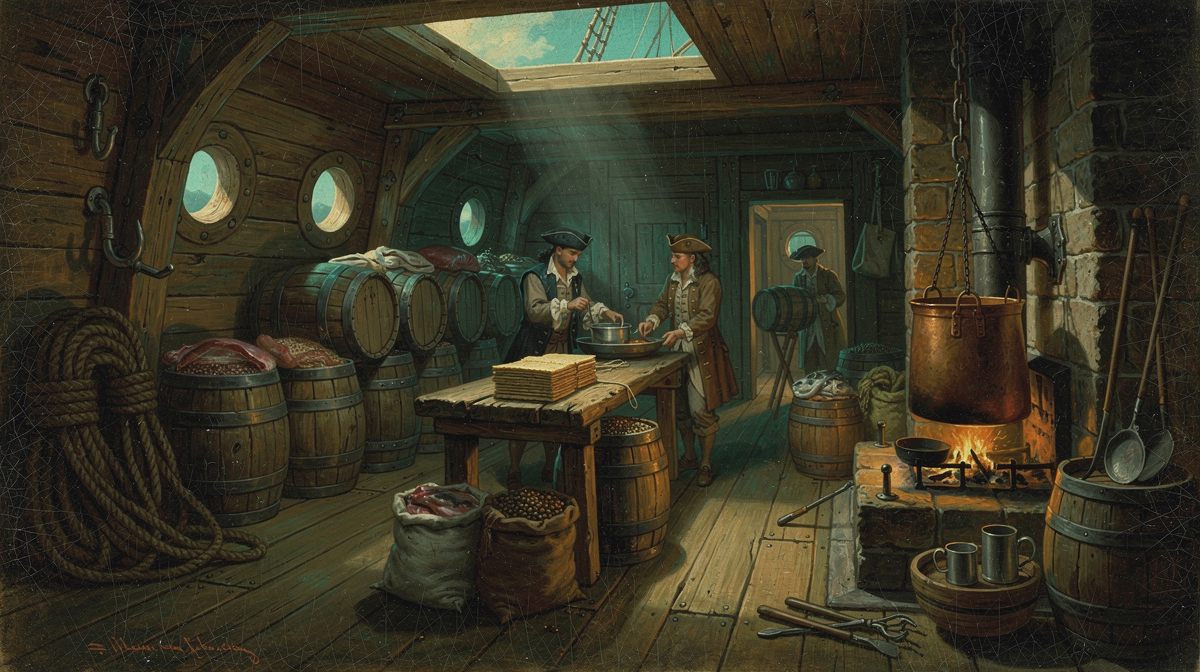
When most people picture pirates, they imagine lawless thugs—violent men driven by greed and operating outside any moral code. Hollywood has given us Jack Sparrow's chaotic scheming and Blackbeard's demonic fury. But the historical reality of Golden Age piracy (roughly 1680–1730) reveals something far more surprising: pirate ships were among the most democratic institutions of their era.
In fact, pirate crews operated under written constitutions decades before the United States had one.
The Articles: Piracy's Social Contract
Before a pirate ship ever raised anchor, the crew gathered to draft and sign their "articles"—a written agreement that governed everything from profit distribution to conflict resolution. Every man who wished to sail had to agree to the terms. Every man got a vote.
These weren't vague handshake deals. Surviving articles from ships like Bartholomew Roberts' Royal Fortune spell out remarkably specific provisions: how plunder would be divided, what compensation a man would receive for losing a limb in battle, how disputes would be settled, and what offenses would result in marooning or death.
Consider the contrast with legitimate maritime employment of the period. Merchant sailors signed on to ships where captains held absolute authority, wages could be withheld on a whim, and brutal discipline was not just legal but expected. Royal Navy vessels were even worse—men were frequently press-ganged into service against their will, flogged for minor infractions, and paid a fraction of what their labor was worth.
On a pirate ship? The captain served at the pleasure of the crew. If he proved incompetent, cowardly, or cruel, the men simply voted him out.
The Quartermaster: A Check on Power
Pirates understood something that took legitimate governments centuries to figure out: concentrated power corrupts. Their solution was the quartermaster—an elected position that served as a check on the captain's authority.
The captain commanded during battle and chase, when quick decisions meant life or death. But in all other matters, the quartermaster held equal or greater authority. He distributed food and plunder, settled disputes between crew members, and represented the common sailors' interests against the officers.
This separation of powers meant that no single man could become a tyrant. A captain who tried to hoard wealth or dole out unfair punishments would find himself facing the quartermaster—backed by the entire crew.
Mixed Crews and Merit-Based Advancement
Perhaps most radical for their time, pirate ships were remarkably egalitarian in matters of race and origin. Escaped slaves sailed alongside English deserters, Spanish prisoners who'd switched sides, and indigenous Caribbean sailors. Former slaves served as officers, gunners, and navigators based on their abilities rather than their backgrounds.
This wasn't progressive idealism—it was practical necessity. Pirate crews needed skilled men, and they couldn't afford to reject talent based on skin color or national origin. But the result was crews where a man's worth was measured by his competence, courage, and loyalty to his shipmates.
In Charleston or Port Royal, a Black man was property. On a pirate deck, he might be the man teaching you how to aim a cannon.
Why Men Chose Piracy
Understanding pirate democracy reframes the entire question of why men became pirates. Yes, the lure of treasure played a role. But for many sailors, piracy offered something far more precious: freedom and dignity.
A merchant sailor might work for years and never accumulate enough to buy land or start a business. A pirate who survived a few successful voyages could retire wealthy—or at least comfortable. More importantly, he lived those years as a free man, with a voice in his own fate and a share of the profits his labor created.
The democratic structure of pirate ships wasn't an accident or a curiosity. It was the primary appeal. Men didn't endure the dangers of outlawry for adventure alone—they did it to escape the rigid class systems, brutal discipline, and exploitative economics of legitimate society.
Why This History Matters to Me
This research has fundamentally shaped the novel I'm currently writing. Set during the Golden Age of Piracy, the story explores what happens when someone raised in colonial society's rigid hierarchies encounters this strange, democratic world aboard a pirate ship.
The more I've dug into the historical record, the more I've come to see piracy not as simple criminality, but as a form of resistance—flawed and violent, yes, but also a rejection of systems that treated most men as disposable. That tension between freedom and morality, between escape and consequence, is what drew me to this period in the first place.
I'll be sharing more historical deep-dives as I continue working on the manuscript. If you're fascinated by this era—or just want to follow along as the book takes shape—stick around.
Keep reading the saga
Get the first chapter of Crimson Cross: Azure Waves free, or preorder the book.
Send me Chapter One