What Pirates Actually Ate: The Surprising Truth About Food at Sea (1698-1700)
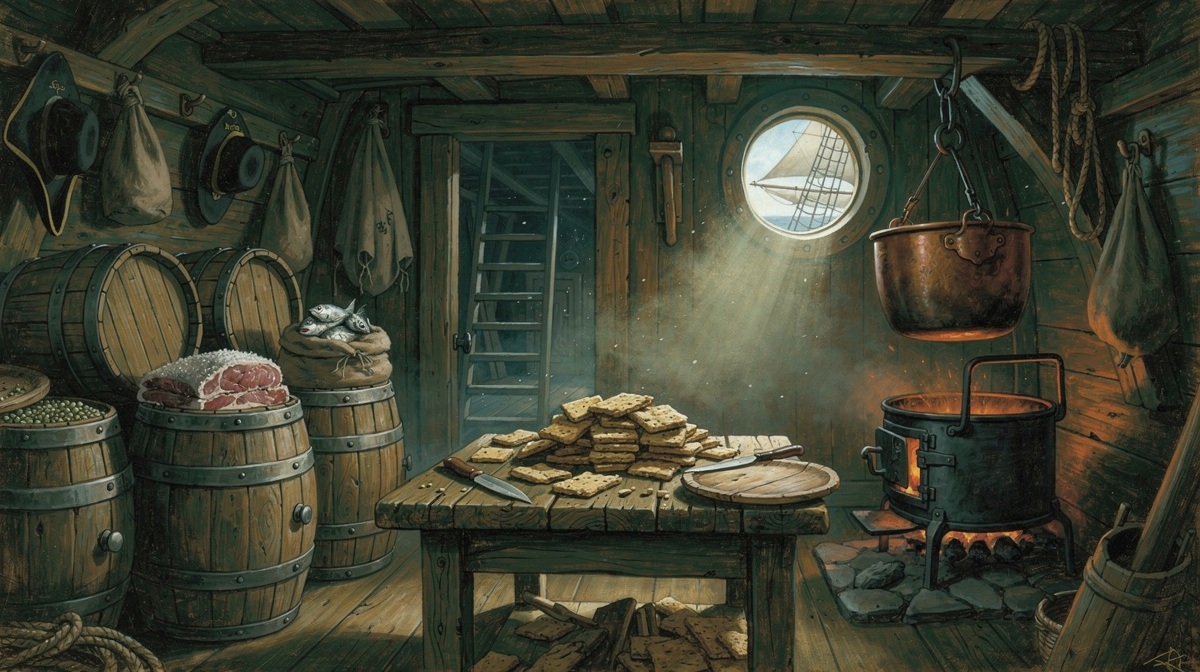
When most people imagine pirate food, they picture crusty sailors gnawing on rock-hard biscuits and washing them down with rum. It's a romantic image, reinforced by countless movies and books. But like most pirate mythology, it's only a sliver of the truth—and the reality is far more interesting.
During the Golden Age of Piracy, food wasn't just fuel. It was politics, economics, and survival all rolled into one. If you want to understand why men turned pirate in the first place, you need to understand what they were eating.
The Myth of Hardtack and Grog
Yes, hardtack existed. These rock-hard biscuits could last for months without spoiling, making them a staple on long voyages. Sailors would sometimes soak them in water or coffee to make them edible. By the end of a voyage, they were often riddled with weevils.
But here's what the movies don't tell you: pirates ate better than legitimate sailors. Why? Because pirates didn't have to ration supplies for a six-month voyage to the East Indies. They could resupply whenever they captured a merchant vessel or raided a coastal settlement. While Royal Navy sailors suffered through months of the same monotonous rations, pirates were looting fresh provisions and living well—at least when fortune favored them.
What Was Actually on the Menu?
Let's talk specifics. A typical pirate vessel during 1698-1700 would have stocked:
Salted Meat
Pork and beef preserved in brine-filled barrels were common. The salt content was so high that cooks had to soak the meat in seawater before cooking it. On a good ship, this meant protein several times a week. On a bad ship, the meat turned rancid and had to be thrown overboard.
Dried Peas and Beans
These legumes kept well and provided crucial nutrition. Pirates often made a dish called "pease porridge" or "lobscouse"—a thick stew combining dried peas, salted meat, and whatever vegetables were available. It wasn't elegant, but it kept scurvy at bay longer than pure hardtack.
Cheese
Hard cheeses like Cheshire could survive long voyages. By the time they were eaten, they were often crawling with mites, but protein was protein.
Live Animals
This is where pirates had a real advantage. When they captured merchant vessels, they took livestock. Chickens provided fresh eggs. Goats gave milk. Pigs could be butchered for fresh meat. Pirates heading to or from the Caribbean often loaded up on sea turtles, which could survive for weeks in the ship's hold, providing fresh meat on demand.
Fruit—When They Could Get It
Citrus fruits spoiled quickly, but pirates operating in the Caribbean had access to limes, oranges, and coconuts when they raided coastal areas or stopped at islands. This accidental vitamin C intake helped prevent scurvy, though they didn't understand why.
Fish
Depending on the waters they sailed, crews would catch fresh fish—tuna, mahi-mahi (dolphinfish, not the mammal), and flying fish that landed on deck at night. A good day's catch could feed the entire crew.
The Alcohol Situation
Yes, pirates drank. A lot. But it wasn't just about getting drunk.
Fresh water spoiled quickly in wooden barrels, turning green and slimy within weeks. Beer was safer to drink and provided calories. Wine and rum were even better—the alcohol content killed bacteria. On English ships, sailors received a daily ration of a gallon of beer or a pint of rum mixed with water (the famous "grog").
Pirates, being pirates, often ignored the "mixed with water" part.
But here's the thing: chronic drunkenness on a working ship meant death. Falling from rigging, botched navigation, and failed combat—alcohol had consequences. Most pirate articles (their written codes) included provisions about drinking, and many crews restricted hard liquor until evening or during celebrations after a successful raid.
The Social Politics of Food
On a Royal Navy vessel, officers ate vastly better than common sailors. The captain's table featured wine, fresh bread baked daily, livestock kept for officer consumption, and delicacies purchased at port.
Pirates? They ate together. Democratic crew structures meant democratic food distribution. When a ship captured provisions, the entire crew benefited equally. Some pirate articles specifically outlined fair distribution of food and drink.
This wasn't just about fairness—it was practical. A well-fed crew was a loyal crew. A starving crew mutinied. Pirates understood this in ways the Royal Navy often didn't.
When Food Ran Out
Of course, not every voyage went smoothly. When pirates couldn't capture prizes or got stuck in a long chase, they suffered the same way legitimate sailors did:
- Biscuits so moldy they glowed in the dark
- Meat so rotten it liquefied in the barrel
- Water thick with algae and larvae
- Rats (which were sometimes eaten when protein ran out)
- Leather, including belts and shoes, boiled into a gelatinous "soup"
Scurvy appeared first—bleeding gums, loosening teeth, old wounds reopening. Then came dysentery from contaminated water. Starvation followed if resupply didn't come. Some of the most brutal pirate raids weren't about gold. They were about food. A ship full of flour, salted pork, and fresh water was worth its weight in pieces of eight when you were starving.
Why This Matters
Understanding what pirates ate reveals something crucial about the Golden Age of Piracy: these men weren't mindless criminals or romantic adventurers. They were sailors making calculated decisions about survival.
The promise of equal shares, better food, and democratic governance wasn't just philosophy—it was a competing labor model. For a merchant sailor beaten by officers, fed rotten meat, and paid a pittance, piracy offered a genuine alternative.
When you read about pirates capturing a ship and "going on the account," remember: they were also choosing fresh eggs over maggoty biscuits, equal portions over officer privilege, and the chance to eat well over the certainty of eating poorly.
The Golden Age of Piracy wasn't just about treasure. It was about who got to eat, how much, and whether you had any say in the matter.
And that's a story worth telling.
The Legacy of Pirate Cuisine
As we delve deeper into the culinary world of pirates, we find that their choices shaped not only their lives but also influenced maritime culture. The food they consumed reflected their adaptability and resilience.
Culinary Innovations
Pirates often had to innovate with limited resources. They learned to cook with whatever they could find, blending flavors from different cultures. This fusion of ingredients and techniques laid the groundwork for what we now consider traditional maritime cuisine.
Cultural Exchange
When pirates raided coastal settlements, they didn't just take food; they also exchanged recipes and cooking methods. This cultural exchange enriched their diets and introduced new flavors. Imagine a pirate ship where a hearty stew combines Caribbean spices with European techniques!
The Influence on Modern Cuisine
Today, we can trace some of our favorite dishes back to these adventurous sailors. The use of preserved meats, hearty stews, and fresh seafood can all be linked to pirate culinary traditions. So next time you enjoy a seafood dish or a hearty stew, think of the pirates who paved the way for these flavors.
Conclusion: A Taste of Freedom
In the end, the food pirates consumed was more than just sustenance. It was a symbol of their freedom and rebellion against oppressive systems. They chose their meals, shared equally, and created a sense of community on the high seas.
So, the next time you think of pirates, remember their culinary adventures. They weren't just after gold; they were after a taste of freedom, equality, and a life lived on their own terms.
And that, dear reader, is a legacy worth savoring.
Keep reading the saga
Get the first chapter of Crimson Cross: Azure Waves free, or preorder the book.
Send me Chapter One